 +371 2022 8895
  info@lynxgear.lv



John Lee Phoenix Katana, decorative Japanese-style sword


Description
John Lee Phoenix Katana, decorative Japanese-style sword
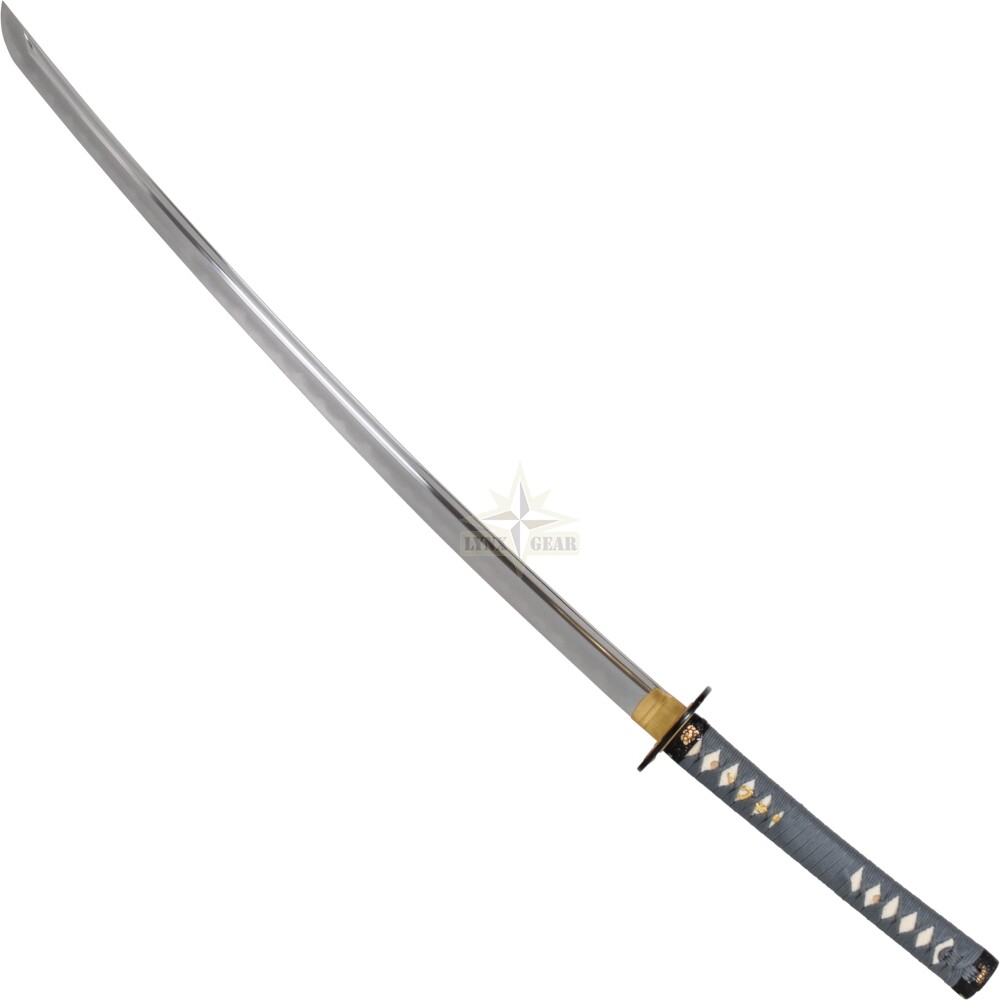
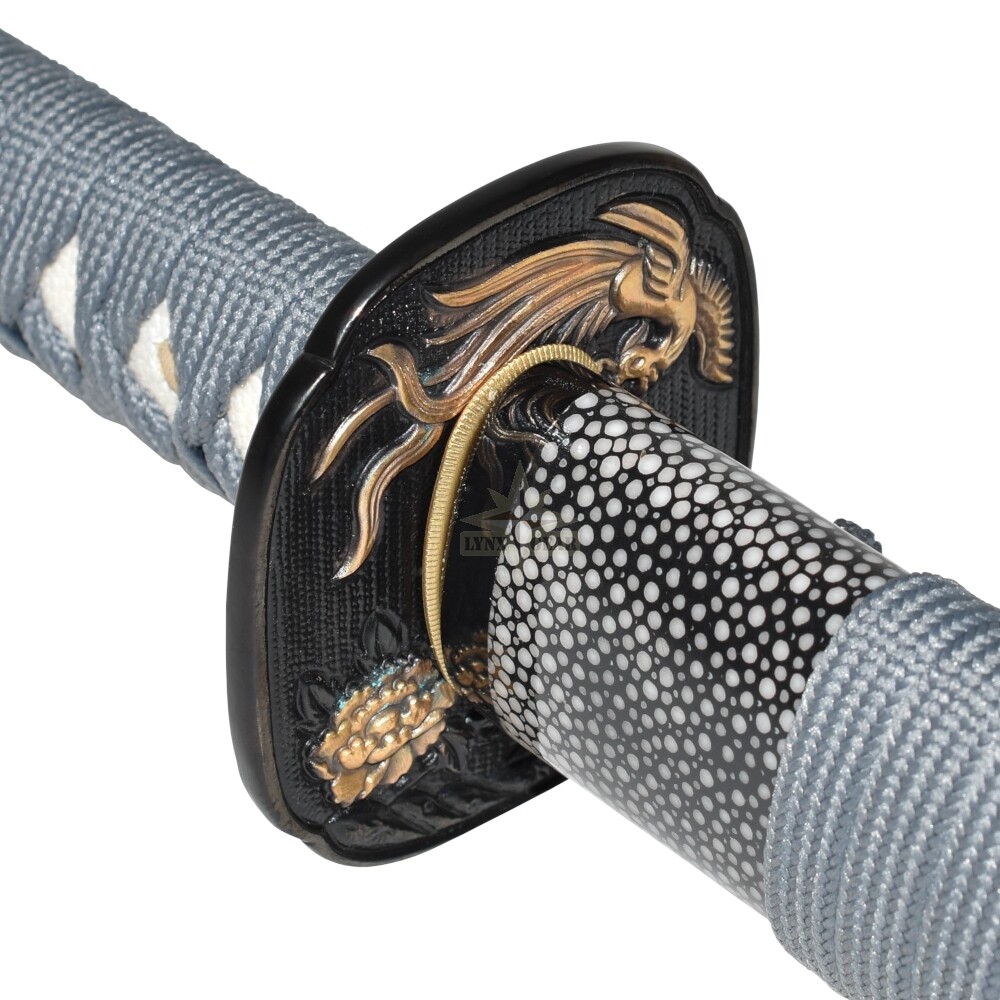
The John Lee Phoenix Katana is a decorative and functional Japanese-style sword inspired by the symbolic hō-ō, the mythical phoenix-like bird of East Asian tradition. The hō-ō is regarded as a heavenly bird that appears in times of peace, harmony and just rule, making this katana a meaningful piece for collectors of Japanese-inspired swords and traditional symbolism.
The hand-forged blade is made from 1095 carbon steel and features a Bo-Hi fuller. It is produced in Kobuse-style construction and traditionally clay-hardened to create a real Hamon line. The blade is differentially hardened to approximately 60 HRC at the cutting edge and approximately 40 HRC at the back, combining a hard edge with a softer, more resilient spine.
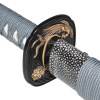
The fittings are richly decorated: the Habaki is made from brass, while the iron Tsuba, Fuchi, Menuki and Kashira feature edelweiss motifs with gold and silver-coloured decoration. The handle is wrapped in grey silk in Katate Maki, or war-wrap style, over real ray skin. The blade is secured in the handle by two Mekugi pegs.
This is a replica sword, but it remains a dangerous sharpened blade. It must be handled, stored, transported and displayed with extreme care.
Key Features
- Japanese-style katana replica with phoenix-inspired theme
- Hand-forged blade made from 1095 carbon steel
- Blade made in Kobuse-style construction
- Traditionally clay-hardened blade
- Real Hamon line
- Bo-Hi fuller
- Differential hardness: approx. 60 HRC edge and 40 HRC back
- Brass Habaki blade collar
- Iron Tsuba, Fuchi, Menuki and Kashira
- Edelweiss decoration with gold and silver-coloured details
- Grey silk Katate Maki handle wrap
- Real ray skin under the handle wrap
- Two Mekugi pegs securing the blade in the handle
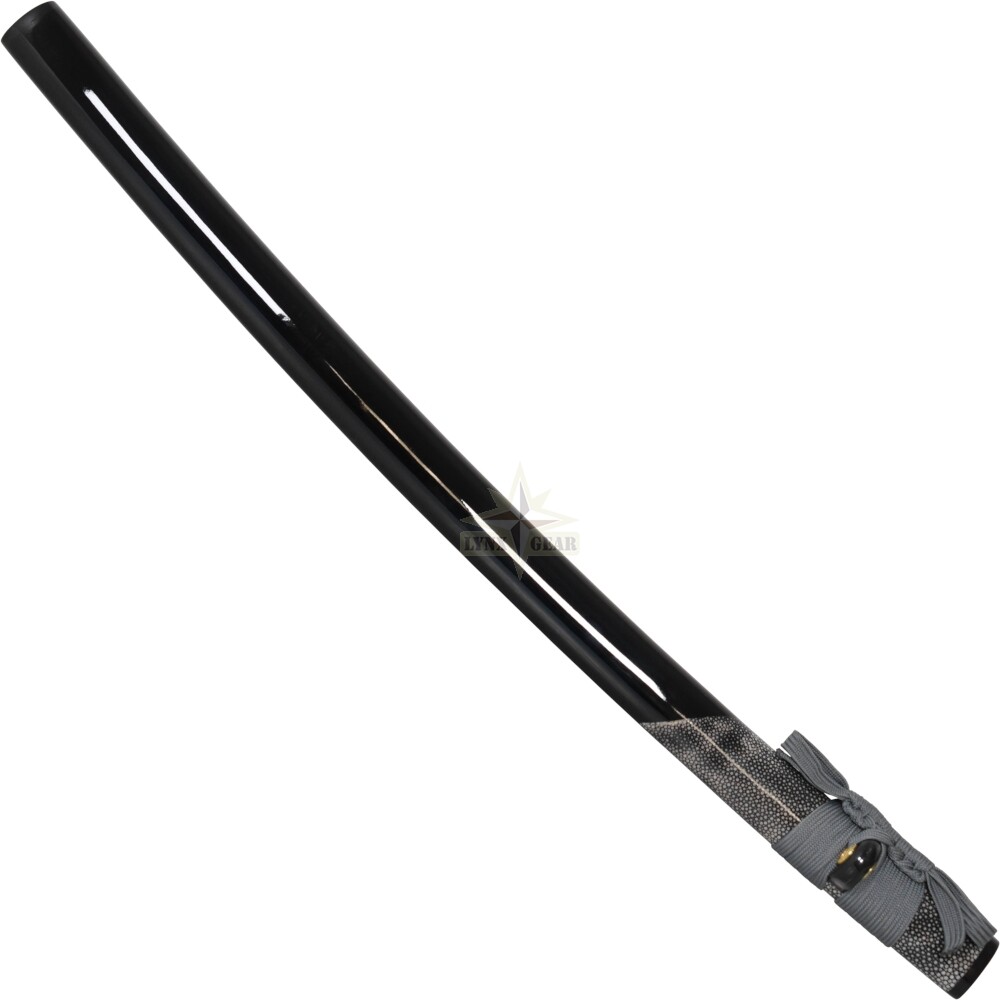
- Wooden scabbard with ray-skin detail
- Blade length: approx. 72 cm
- Overall length without scabbard: approx. 101 cm
- Weight without scabbard: approx. 1050 g
Phoenix Symbolism
The phoenix motif refers to the hō-ō, a legendary bird associated with peace, harmony, justice and good fortune. In traditional interpretation, the appearance of the hō-ō was considered a favourable omen and a sign that the world was in balance.
This symbolic background gives the John Lee Phoenix Katana a refined character that is well suited to collectors interested in Japanese-inspired cultural themes and meaningful decorative details.
Hand-Forged 1095 Carbon Steel Blade
The blade is made from 1095 carbon steel, a high-carbon steel capable of taking a very hard edge. This material is commonly used in traditional-style blades where sharpness, hardness and visible heat-treatment features are valued.
1095 carbon steel is not stainless. It requires regular cleaning, drying and oiling to protect it from rust, staining and corrosion. Fingerprints, moisture and acidic residues should be removed immediately after handling.
Kobuse-Style Construction
The blade is made in Kobuse style, a traditional Japanese-inspired construction method in which a harder outer steel structure is combined with a softer core. This type of construction is intended to balance edge hardness with improved resilience.
As with all replica swords, actual durability depends on correct use, maintenance and respect for the limitations of the construction.
Clay-Hardened Blade with Real Hamon
The blade is traditionally hardened using clay coating. This differential hardening process produces a harder cutting edge and a softer back, creating the visible Hamon line along the blade.
The approximate hardness is 60 HRC at the edge and 40 HRC at the back. This gives the blade a harder cutting area while retaining more flexibility along the spine.
Bo-Hi Fuller
The blade includes a Bo-Hi, or fuller. This groove reduces weight and can improve handling balance while also adding a traditional visual element to the blade.
The Bo-Hi does not make the blade harmless or reduce the need for careful handling.
Traditional-Style Handle Construction
The handle is made from wood with real ray skin under the wrap. The grey silk wrap is applied in Katate Maki, also known as war-wrap style, giving the handle a distinctive traditional appearance.
The blade is secured in the handle with two Mekugi pegs. These should be inspected periodically by a knowledgeable person, especially if the sword is ever used for any controlled martial arts cutting practice where lawful and appropriate.
Decorative Iron Fittings
The sword features iron fittings including the Tsuba, Fuchi, Menuki and Kashira. These fittings are decorated with edelweiss motifs and gold and silver-coloured details, giving the katana a refined collector-oriented finish.
The blade collar, or Habaki, is made from brass and helps seat the blade correctly in the scabbard.
Recommended Use
- Collection and display
- Japanese-style sword collections
- Historical and cultural interest
- Decorative presentation
- Lawful martial arts ownership by experienced users
- Controlled training or cutting practice only where lawful and under qualified supervision
This katana is not a toy, costume accessory or casual handling item. It should not be used for uncontrolled sparring, blade-to-blade contact, public display, intimidation, theatrical contact work or any unlawful purpose.
Technical Specifications
| Product Name | John Lee Phoenix Katana |
| Product Type | Japanese-style katana replica |
| Blade Material | 1095 carbon steel |
| Blade Construction | Kobuse-style construction |
| Hardening | Traditionally clay-hardened |
| Hamon | Real Hamon line |
| Fuller | Bo-Hi |
| Blade Hardness | Approx. 60 HRC at the edge, approx. 40 HRC at the back |
| Blade Length | Approx. 72 cm |
| Handle Length | Approx. 28.5 cm |
| Overall Length Without Scabbard | Approx. 101 cm |
| Weight Without Scabbard | Approx. 1050 g |
| Handle Material | Wood, real ray skin and grey silk wrap |
| Handle Wrap | Katate Maki, war-wrap style |
| Blade Collar | Brass Habaki |
| Fittings | Iron Tsuba, Fuchi, Menuki and Kashira |
| Fitting Decoration | Edelweiss motifs with gold and silver-coloured details |
| Mekugi | Two handle pegs |
| Scabbard | Wood with ray-skin detail |
| Stainless Steel | No |
| Sharpened Blade | Yes |
Why Choose the John Lee Phoenix Katana?
The John Lee Phoenix Katana combines traditional Japanese-inspired sword construction details with symbolic decoration and collector appeal. Its 1095 carbon steel blade, Kobuse-style construction, clay hardening and real Hamon line make it more than a purely decorative wall hanger.
The grey silk Katate Maki wrap, ray skin, brass Habaki and decorated iron fittings give the sword a refined appearance suitable for display and serious collection.
Because it is a sharpened carbon-steel blade, it is best suited to responsible collectors and experienced users who understand sword safety, maintenance and legal requirements.
Care and Maintenance
- Handle the blade only with clean, dry hands or suitable gloves.
- Remove fingerprints immediately after handling.
- Keep the 1095 carbon steel blade clean, dry and lightly oiled.
- Use a suitable sword oil or high-quality protective oil for carbon steel.
- Do not store the blade wet or dirty.
- Avoid touching the blade edge or Hamon area unnecessarily.
- Inspect the Mekugi pegs periodically.
- Check the handle, wrap, fittings and scabbard for looseness or damage.
- Do not store the sword in damp rooms, basements or direct sunlight.
- Avoid long-term storage in a sealed plastic bag or humid environment.
- Do not use abrasive cleaners on the blade or fittings.
- Do not attempt cutting practice without proper training, safe location and lawful permission.
Safety Information
- This is a sharpened sword and may cause serious or fatal injury.
- It is not a toy, costume prop or casual display accessory.
- Keep the blade sheathed when not being inspected or maintained.
- Draw and return the blade to the scabbard slowly and carefully.
- Keep fingers, hands and body parts away from the cutting edge.
- Never swing the sword near people, animals, furniture, glass or fragile objects.
- Never use for uncontrolled sparring or blade-to-blade contact.
- Do not use for cutting unsuitable targets, hard objects, metal, stone, bone or dry wood.
- Do not attempt to modify, sharpen or disassemble the sword without proper knowledge.
- Inspect the handle and Mekugi before any handling beyond display.
- Keep securely stored away from children and unauthorised persons.
- Use a locked cabinet or secure display system where appropriate.
Legal and Responsible Use Notice
This product must be purchased, possessed, carried, transported, displayed and used only in accordance with the laws and regulations applicable in the customer’s country, region and municipality.
The customer is responsible for determining whether the purchase, possession, import, transport, display or use of this sword is lawful in their location and for using it safely, responsibly and only for lawful purposes. The seller does not encourage, recommend or authorise unlawful, threatening, offensive or harmful use.
Classification of this product within a katana, sword, replica, martial arts, collector, historical, decorative or self-defence category does not constitute legal advice, confirmation that it may legally be carried in public, or a recommendation to use it against another person.
Applicable laws may differ according to blade length, sharpness, construction, intended use, place of possession, method of transport and surrounding circumstances. Misuse may cause serious injury, death, property damage or legal consequences.
Because this product is a realistic sharpened sword, public display, threatening handling or unsecured transport may cause alarm and may lead to intervention by authorities. Transport it discreetly, securely and only where lawful.
The sword must be stored securely and kept away from children and unauthorised persons.
This notice does not exclude or limit any statutory consumer rights or legal obligations that cannot lawfully be excluded.
FAQ
Is the John Lee Phoenix Katana sharpened?
Yes. It is a dangerous sharpened replica sword and must be handled with extreme care.
What steel is the blade made from?
The blade is made from 1095 carbon steel.
Is 1095 carbon steel stainless?
No. 1095 carbon steel is not stainless and must be cleaned, dried and oiled regularly to prevent rust.
What is Kobuse-style construction?
Kobuse-style construction is a traditional Japanese-inspired blade structure combining harder outer steel with a softer core to balance edge hardness and resilience.
Does the blade have a real Hamon?
Yes. The blade is clay-hardened and has a real Hamon line.
What is the blade hardness?
The blade is approximately 60 HRC at the cutting edge and approximately 40 HRC at the back.
What is a Bo-Hi?
A Bo-Hi is a fuller or groove in the blade. It can reduce weight and affects the sword’s balance and appearance.
What is the handle made from?
The handle is made from wood with real ray skin and grey silk wrap.
What style is the handle wrap?
The handle is wrapped in Katate Maki style, also known as war-wrap style.
How is the blade secured in the handle?
The blade is fixed in the handle with two Mekugi pegs.
What is the scabbard made from?
The scabbard is made from wood with ray-skin detail.
How long is the blade?
The blade length is approximately 72 cm.
How long is the handle?
The handle length is approximately 28.5 cm.
What is the overall length?
The overall length without the scabbard is approximately 101 cm.
How much does it weigh?
The sword weighs approximately 1050 g without the scabbard.
Is it suitable for cutting practice?
Only experienced users should consider controlled cutting practice, and only where lawful, in a suitable environment, with proper instruction and safe targets. It is not suitable for casual use or uncontrolled practice.
Can it be used for sparring?
No. It is a sharpened steel sword and must never be used for sparring, blade-to-blade contact or training against another person.
Can it legally be carried in public?
This depends on local law and circumstances. A sharpened katana may be highly restricted in many jurisdictions. Customers must check applicable laws and transport it discreetly and securely only where lawful.
Glossary
- Katana: Japanese-style curved sword traditionally associated with the samurai.
- Hō-ō: Mythical phoenix-like bird associated with peace, harmony and good fortune.
- 1095 Carbon Steel: High-carbon steel capable of taking a hard edge but requiring corrosion protection.
- Kobuse: Japanese-inspired blade construction combining harder outer steel with a softer core.
- Hamon: Visible hardening line created by differential clay hardening.
- Bo-Hi: Fuller or groove running along part of the blade.
- Habaki: Blade collar that helps secure the blade in the scabbard.
- Tsuba: Sword guard positioned between blade and handle.
- Fuchi: Collar fitting at the front of the handle.
- Menuki: Decorative grip ornaments placed under or around the handle wrap.
- Kashira: Pommel cap at the end of the handle.
- Katate Maki: Japanese-style handle wrap also known as war-wrap.
- Mekugi: Pegs used to secure the blade tang inside the handle.
- HRC: Rockwell C hardness scale used for hardened steel.
Manufacturer & GPSR Information
Manufacturer:
Haller Stahlwarenhaus GmbH
Am Gartennest 1
74544 Michelbach an der Bilz
Germany